
Editing Wikipedia
I'm a Wikipedian whose read bias in articles

As we move deeper into the “AI” era of ChatGPT, some of us remain skeptical and critical about stories in our information feeds. Many folks rely on sites like Wikipedia for authoritative summaries. But even at Wikipedia, we will be challenged by biased narrative.
I’ve been a Wikipedian for decades, and began seeing editors control a biased narrative about articles. Recently, I contributed to an article about a case before SCOTUS, the US Supreme Court. My contribution was redacted by the editor for a reason that I strongly suspect is narrative bias. The experience reminded me of the Scopes “Monkey” trial that happened 100 years ago.
The book banning case, Mahmoud vs. Taylor, was about LGBT rights versus teacher’s academic freedom. Or so it is framed. My close reading of the Wiki article about the case detected that the article wove a biased narrative about speech. The Wiki article read like a conservative court oppressing LGBTQIA+ students.
I decided to read the court’s briefs and listen to the oral argument. (Yes, I’m a nerd.) It became clear to me that the case was more nuanced than the Wiki article led on. I noticed the Wiki article cited a source that claimed teachers were free to say anything, but this source originated from a journalist, and not the Court case itself. So I decided to use my Wikipedian contributions to counter-balance this narrative with another source.
I added evidence to the Wiki article that challenged the idea that teachers were free to say anything. Specifically, I cited the petitioner’s brief. That brief was written by lawyers who submitted to the Court evidence that teachers testified that they were given talking scripts by the district about sex and gender theories. Teachers were expected to facilitate the book reading by stating as a fact that more than two sexes exist. And if a student rejected this statement, these scripts told teachers to correct that student as wrong.
This evidence about teacher academic freedom was also debated in oral argument. The Justices sought clarity about this point. The quoted journalist claimed that teachers were not told what to say to students about the book’s meanings. In other words, the Wiki article’s narrative implied that teachers were free to challenge queer theory, and the Court was imposing itself as an anti-gay institution.
My change did not remove the journalist’s quote. Nor did I change the interpretation of oppressing gay people. My change was to counter-balance the article’s biased reliance on a journalist with legal Court filings. As a Wikipedian, I did not weigh in with interpretation of whether the parents objecting to the banned books were right or wrong. My change was simply to add to the article’s sources. Let the reader decide.
A Wikipedian editor redacted my change to the article. The reason for redaction was: my quote was from petitioners lawyers. These lawyers wrote for parents who objected to the books.
I strongly suspect that the reason to accept a journalist’s interpretation of the case over the lawyers filing evidence to the Court is to perpetuate a biased narrative. The Wikipedia editor accepted evidence as reported by journalists talking about the case, but rejected the filing of lawyers that was included in oral debate of the Justices. Including rejecting one of the most senior lawyers in the US (aka. the Solicitor General).
This is not an outlier example. I’ve contributed to 2 other Wikipedia articles that show signs of bias narrative superseding balanced reporting. In the Wiki article about Twitter Files, there is no mention that federal courts heard evidence about Twitter’s manipulation of information in Murthy v. Missouri. This is a critical omission because that Wikipedia article’s Talk and History reveal the editors considered either removing the article or labelling the Twitter Files as conspiracy theory. A reader of the article doesn’t realize that this unimportant “Nothing Burger” that’s mere conspiracy theory had more evidence that originally released, and that evidence has been reviewed by 4 federal judges (1 circuit court, and 1 appellate court).
Labelling Wiki articles conspiracy theories, removing or moving them, does happen, like with the cultural Marxism entry. Some Wikipedians, especially editors who believe their role is to police acceptable information, are either blind to or complicit in biased narratives in the encyclopedia’s articles.
“AI” chatbots in this era of information will not necessarily simplify our understanding of nuanced and complex topics, like homophobia and freedoms of speech. More technical users understand that the LLM models used to power “AI” c chatbots are trained on the Wikipedia encyclopedia. So the “AI” chatbots will simply parrot whatever is in the articles.
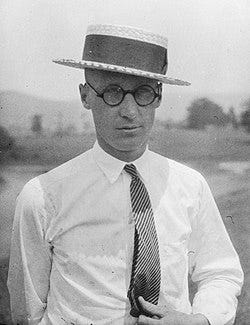
Narratives can be created with biased purpose. Many Americans remember the Scopes trial, or so-called monkey trial about evolution, that happened in 1925. Few of us take note that the trial was also dramatically staged, even though it considered a serious and nuanced topic for teachers and parents.
One antidote to biased narratives is to think critically. We’re all consuming huge feeds of information. It takes effort to be critical about this information. So keep checking those sources!